A practical guide for freelancers, self-employed professionals, and anyone navigating non-traditional income
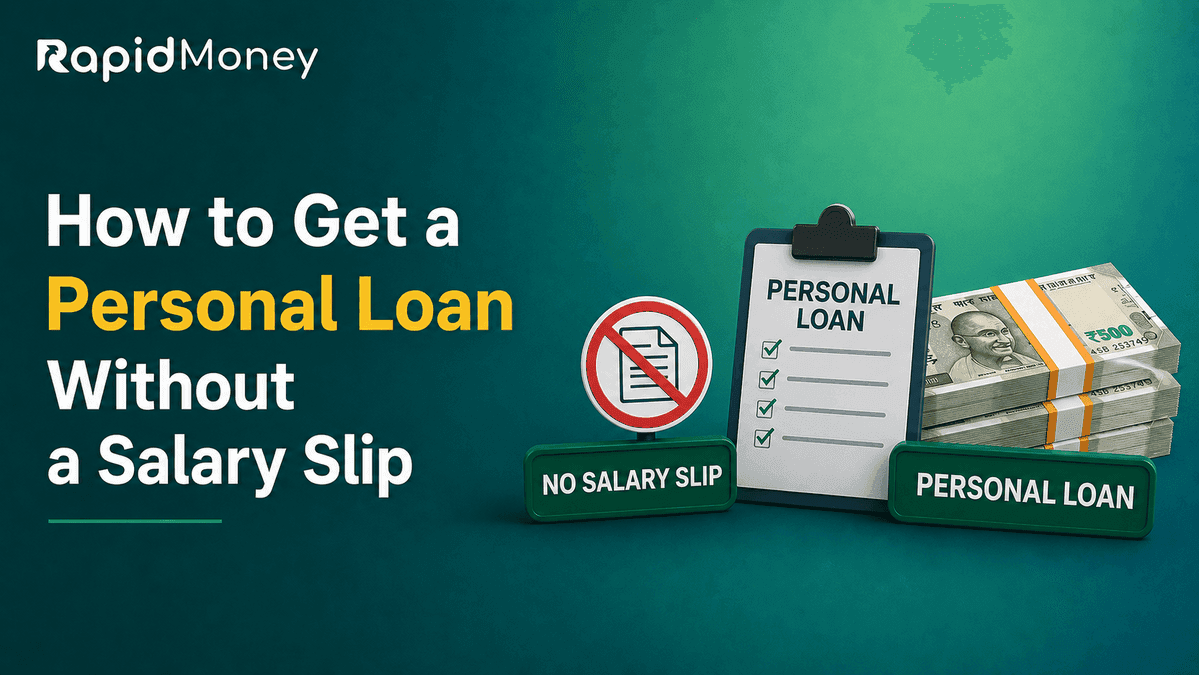
If you’ve ever tried to apply for a personal loan and been asked to submit your last three salary slips — only to realise you don’t have any — you’re not alone. Millions of people in India work as freelancers, run small businesses, earn through contracts, or work in the informal sector. Their incomes are real, sometimes substantial, but they don’t come packaged in the neat monthly PDF that banks love to see.
The bright side? You can still get a personal loan online even if you don’t have a salary slip. It just means you need to know which lenders to approach, what documents actually matter and how to present your financial profile in the best possible light.
Let’s walk through everything you need to know.
Before figuring out how to work around the requirement, it helps to understand why it exists.
Salary slips serve one core purpose for lenders: proof of stable, recurring income. They tell the bank how much you earn, how regularly you earn it, whether your employer is deducting taxes at source (which signals legitimate employment), and roughly how long you’ve been in your current job.
In short, a salary slip is a shortcut to answering the question: Can this person repay the loan?
If you don’t have salary slips, you need to answer that same question through other means. And there are quite a few ways to do that.
Building a strong credit history can help you understand your creditworthiness. Read our guide on how to build credit from scratch to learn more.
This situation is more common than most people think. It typically applies to:
If you fall into any of these categories, read on.
The key to getting approved without a salary slip is to substitute documents that paint the same picture: consistent, verifiable income.
Bank Statements. This is usually the strongest substitute. Bank statements showing six to twelve months of regular credits, consistent balances, and responsible spending habits can tell a lender more than a salary slip ever could. Your statements become your salary slip if you get your income into your account regularly.
Income Tax Returns (ITR) If you’ve been filing your taxes — which you absolutely should — your ITR for the last two to three years is strong evidence of earnings. Lenders particularly value this because it’s a government-verified document. A consistent or growing ITR over multiple years is very reassuring to underwriters.
Employers issue Form 16 or Form 16A, which summarises your TDS deductions. Even if you’re a contractor or part-time worker, Form 16A (for non-salary TDS) serves a similar purpose and confirms that you’re earning taxable income.
Business Registration and P&L Statements. If you run a business, your GST registration, trade licence, audited profit and loss accounts, or CA-certified income statements can all serve as proof of income. Many lenders have specific loan products for self-employed individuals that accept these documents.
Rental Agreements and Rental Income Proof. If part of your income comes from property you rent out, lease agreements and bank credits from tenants are valid income documents.
Investment Statements Fixed deposits, mutual fund portfolios, and other investment accounts demonstrate financial discipline and available assets. While they don’t prove income directly, they strengthen your overall credit profile significantly.
Note : Missing documents or not meeting a lender's eligibility criteria may affect your application. Learn about the common reasons for personal loan rejection and how to avoid common application mistakes.
1. Personal Loans for Self-Employed Most of the major banks and NBFCs have a special personal loan for self-employed people. These come with slightly different eligibility requirements, but common minimum requirements include two to three years in business, a minimum annual income threshold, and tax return documentation.
2. Secured Personal Loans If you own an asset — a fixed deposit, shares, gold, or property — you can use it as collateral to secure a loan. Secured loans are significantly easier to get approved for because the lender’s risk is reduced. The interest rate is also usually lower.
3. Gold Loans In India, gold loans are among the most easily available credit facilities for people who don't have formal income documentation. Banks and specialised lenders like Muthoot Finance and Manappuram have gold loans with minimum documentation, fast disbursal and no income proof. If you have idle gold jewellery, this can be an efficient low-cost borrowing option.
4. Loans Against Fixed Deposits If you have an FD with a bank, you can borrow against it — often up to 90% of its value — at an interest rate just slightly above your FD rate: minimal documentation, no proof of income, and quick processing.
5. Fintech and App-Based Lenders Digital lenders like KreditBee, MoneyTap, LazyPay, Rapidmoney etc. use alternative data points for assessing creditworthiness. They look at your GST filings, bank statement patterns, digital transaction history and credit score, not salary slips. Because the loan amounts are smaller, these platforms can approve and send out the funds within hours.
Your CIBIL score becomes especially important when you don't have traditional income documentation. A score above 750 signals responsible credit behaviour — timely repayment of credit cards, existing loans, and bills — and can often compensate for non-standard income proof.
If your credit score isn’t great or you don’t have a credit history, work on building it before you apply. If it’s small, recurring purchases, use a credit card, and pay the balance off in full monthly. Even six to 12 months of this behavior can make a meaningful difference to your score.
Keep your bank account active and healthy. Ensure that your main account is being credited regularly and is not regularly going into overdraft. Lenders looking at your statements want to see patterns, not just numbers.
Maintain a low debt-to-income ratio. If you already have a large chunk of your income being siphoned off by existing EMIs or liabilities, new lenders will be wary. Before applying, consider paying off or reducing current debt.
File your ITR every year, even if not mandatory. There are many people who are self employed, and don't file if they earn less than taxable income. Don't. A good filing history leads to credibility and more lending options.
Approach lenders with whom you already have a relationship. If you have been with a bank for a few years with a savings account, FD or credit card, the bank has your transaction history. “They are more likely to offer credit to an existing customer with a good payment history than a stranger who has no salary slip.
Consider a co-applicant or guarantor. Many lenders will consider the income of a co-applicant if you have a family member who is willing to co-sign your loan application and is salaried. This can lead to better rates of interest and higher amount of loans.
Before applying through any digital lending platform, understand how it works and verify the relevant lending partner, charges and loan terms. Read our RapidMoney loan app review for more information about the platform and the checks to consider before applying.
Not all lenders ready to bypass the salary slip are doing so for your good. Watch out for:
Always read the terms carefully, check the lender’s RBI registration, and compare the Annual Percentage Rate (APR) — not just the monthly interest rate — across multiple options.
Not having salary slip is an inconvenience, not a dead end. The lending environment in India has changed dramatically and lenders are now more aware than ever that income doesn’t always arrive in a neat, monthly package with a company stamp on it.
What matters, ultimately, is your ability to repay — and there are many ways to demonstrate that. Strong bank statements, consistent tax filings, a healthy credit score, and the right lender can all work together to get you the loan you need, on terms that make sense.
Yes. Most lenders accept ITR, bank statements, business records and other alternative income proofs.
Yeah. A score above 750 usually increases approval chances and can help secure better interest rates.
Sure. Freelancers can provide income proof like bank statements, contracts and tax returns.
Commonly accepted alternatives include the last 6-12 months of bank statements, two years of ITR filings, Form 16, or rental/freelance income receipts.
No, it isn't mandatory. A salary slip is simply the easiest way for salaried employees to prove income. If you can't provide one, lenders will ask for alternate documentation to assess your repayment capacity instead.
It's harder but possible. Options include applying with a creditworthy co-applicant or guarantor, offering collateral such as gold, fixed deposits, or property, or working with lenders who accept ITR or Form 16 alone as income proof.