You need urgent funds, find a suitable personal loan, complete the application—and then start wondering: Will my CIBIL score affect approval?
For many borrowers, the CIBIL score for personal loan eligibility is one of the first concerns before applying. Since a personal loan is generally unsecured, lenders do not usually ask for property or another asset as collateral. Instead, they assess factors such as your credit history, income, existing repayment obligations and overall ability to repay.
A good credit profile may strengthen your application, while a low score can make borrowing more challenging. However, your CIBIL score is only one part of the lender's overall assessment.
This guide explains what CIBIL score means, how it may affect personal loan eligibility, what lenders can check beyond your score and what you can do to improve your credit profile before applying.
A CIBIL score is a three-digit number that summarises an individual's credit history and creditworthiness. The score ranges from 300 to 900. In general, a score closer to 900 represents a stronger credit profile.
Your score is based on information in your credit history, which may include your:
Think of it as a quick snapshot of how you have handled borrowed money in the past.
Although people often use these terms together, they are not the same.
A CIBIL score is the three-digit numerical summary of your credit profile. A CIBIL report is a more detailed record containing information about your loan and credit accounts, payment behaviour, balances and credit enquiries.
A lender may review both while evaluating a personal loan application.
A CIBIL score for personal loan assessment can help a lender understand how you have managed credit in the past.
Unlike a secured loan, a personal loan generally does not require collateral. Therefore, lenders may place significant importance on your credit history and repayment behaviour.
A credit profile may help a lender assess:
Regular and timely EMI or credit card payments can indicate responsible credit management. On the other hand, repeated late payments or defaults may raise concerns.
Your score gives lenders a quick view of your past borrowing behaviour. A stronger profile may indicate lower credit risk, although it does not guarantee approval.
Frequent applications for new loans or credit cards can result in multiple lender enquiries. CIBIL notes that Lender enquiries are usually when you request a loan or credit card and too many frequent hard enquiries might negatively impact your score.
Lenders may also review the types of credit accounts you have managed and whether you have handled them responsibly.
However, a CIBIL score does not make the final decision by itself. Income, employment, existing EMIs, documentation and the lender's internal eligibility rules may also matter.
There is no single minimum CIBIL score for personal loan approval that applies to every lender. Each bank, NBFC or lending institution may follow its own credit policy, risk criteria and eligibility requirements.
You may often see specific scores presented online as universal approval thresholds. In practice, the CIBIL score required for personal loan eligibility can vary based on factors such as:
A higher score generally represents a stronger credit profile, but it does not guarantee that a loan will be approved. Similarly, a lower score does not automatically mean every application will be rejected.
The lender makes the final decision after reviewing the overall application.
The table below gives a general view of how different score ranges may be perceived. It should not be treated as an approval guarantee.
A good CIBIL score for personal loan applications generally reflects consistent and responsible credit behaviour over time.
Rather than focusing only on reaching one particular number, it is useful to understand what makes a credit profile stronger.
Timely repayment of loan EMIs and credit card payments is one of the most important practices that help maintain a strong credit history.
Frequently using most or all of your available credit limit may suggest dependence on borrowed funds. Managing balances responsibly can support a healthier credit profile.
An established history of managing credit responsibly gives lenders more information about your repayment behaviour.
Applying for several loans or cards within a short period can create multiple credit enquiries. This may affect how lenders view recent credit-seeking behaviour.
Errors in a credit report can create unnecessary problems. Reviewing the report regularly helps you identify accounts, balances or enquiries that you do not recognise.
A strong personal loan CIBIL score is useful, but lenders may still reject an application if other eligibility conditions are not met.
It may be possible to get a personal loan with a low CIBIL score, but approval can be more difficult and depends on the lender's eligibility and risk assessment.
A low score may indicate previous repayment issues, high credit usage, frequent applications or a limited credit history. However, lenders can also consider other aspects of your financial profile.
These may include:
A regular and verifiable income may help the lender assess whether you can manage the proposed EMI.
Stable employment can support your application, although each lender may have its own requirements for salaried and self-employed applicants.
A lender may consider how much of your current income already goes towards loan repayments and other financial commitments.
Older credit problems may not tell the complete story. A lender may also review whether your recent payment behaviour has improved.
The amount you apply for may affect the lender's affordability and risk assessment.
If your score is currently weak, submitting applications to many lenders at once may not be the best approach. Consider reviewing your credit report, improving repayment behaviour and applying only after checking the relevant eligibility criteria.
Your personal loan eligibility CIBIL score is important, but it is not the only factor that can influence a lender's decision.
Lenders may assess whether your income is sufficient to manage the proposed EMI along with regular expenses and existing obligations.
Your job type, employment history or business stability may form part of the overall assessment.
Lenders generally have their own age, income, occupation and location requirements.
Having many active loans does not automatically mean rejection. But if you have a lot of financial responsibilities already, then you may not have the capacity to take another EMI.
A lender may assess how much of your income is already committed to debt repayments.
Multiple applications in a short period may result in several lender enquiries. CIBIL explains that the enquiries section records instances when a lender checks your report while processing a loan or credit card application.
Incorrect, incomplete or inconsistent information can delay an application or affect the lender's decision.
Two lenders may evaluate the same borrower differently because their risk models and eligibility criteria can vary.
This is why even an excellent credit score cannot guarantee personal loan approval.
If you are not planning to borrow immediately, improving your credit habits before applying may strengthen your overall profile.
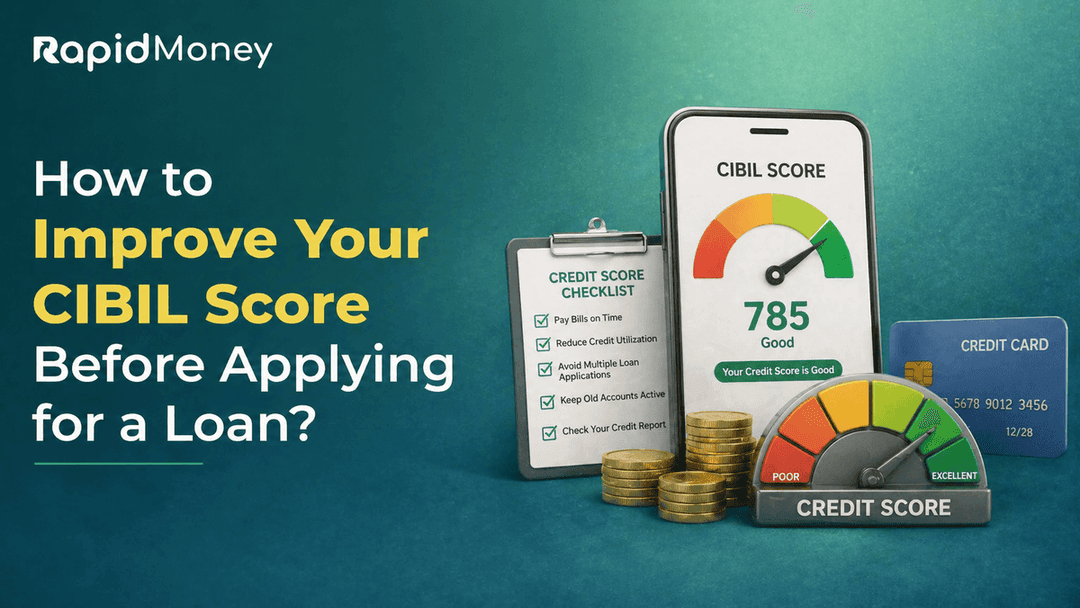
Here are practical steps on how to improve CIBIL score for personal loan eligibility.
Late payments or missed EMIs could harm your credit history. Set reminders. Or instructions to pay automatically. Where appropriate. But always check your balance.
Consistency matters more than short-term fixes.
If you routinely spend a big part of your available credit, work on reducing outstanding balances over time.
Don't go into more debt just to create the illusion of a better one.
Check the research eligibility requirements before you apply. Applying for applications with more than one lender in a short space of time can result in many hard enquiries.
CIBIL advises applying for credit only when needed because multiple and frequent lender enquiries may negatively affect the score.
Review your report for:
If you find inaccurate information, use the official dispute process. CIBIL also notes that lender data may take time to update, so check the date on which an account was last reported before raising a dispute.
Lenders could look at a lengthier credit history to learn more about how you borrow money. Don’t close an old account, thinking it will be an instant boost to your score.
Consider the full financial implications before making changes to existing credit accounts.
Do not take a loan just to create a different credit mix. Instead, manage the credit products you genuinely need in a responsible way.
If a significant part of your monthly income is already taken up by EMIs, then you should try to reduce the existing commitments before taking on another loan.
In general, the key to a better credit profile is consistent financial behaviour. Beware of anyone who promises a fast or guaranteed score rise.
Even borrowers with a reasonable score can make mistakes before submitting an application.
Sending several applications in a short period may create multiple hard enquiries and can make you appear credit-hungry.
A missed payment just prior to applying can hurt your previous repayment history.
High balances can indicate financial pressure. Try to manage revolving credit responsibly.
An incorrect account or overdue amount can affect how your profile appears. Review your report before you need urgent credit.
Do not close an account only because you assume it will improve your score. Consider fees, account history and your overall credit profile.
A strong score may help, but income, affordability, documents and lender-specific rules still matter.
How to Check Your CIBIL Score Before You Apply
Before submitting a personal loan application, review both your score and your detailed credit report.
This can help you:
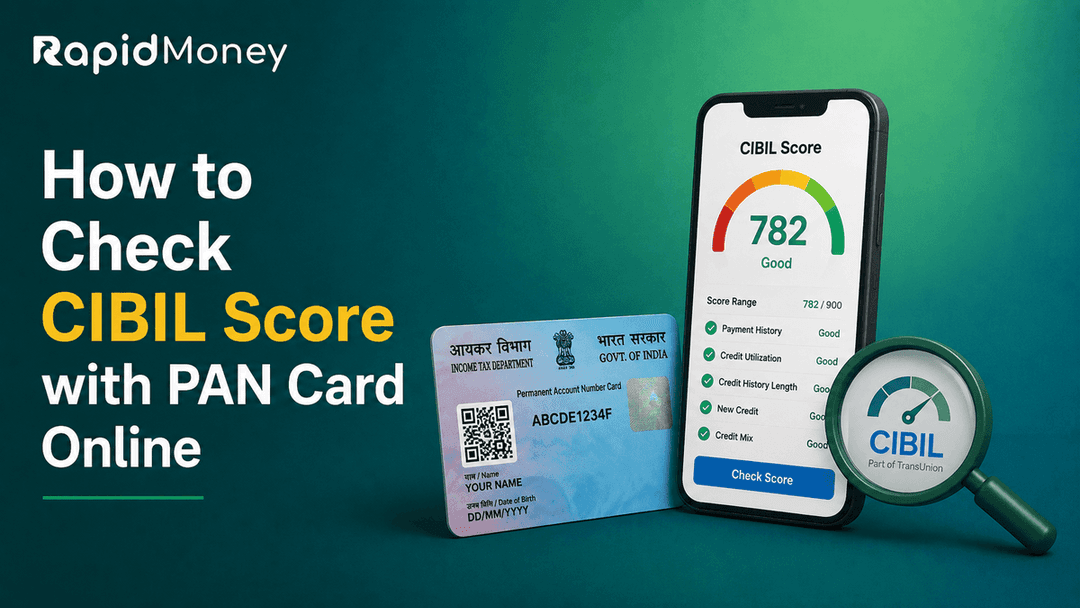
You can read our detailed guide on how to check your CIBIL score with a PAN card for the step-by-step process.
TransUnion CIBIL currently states that eligible consumers can access one free CIBIL Score and Report every calendar year. RBI has also directed credit information companies to provide individuals with one free full credit report, including the credit score, each year.
Checking your own score is different from a lender accessing your report in connection with a new credit application.
A strong application begins before you fill in the form.
There is no universal minimum CIBIL score for a personal loan that applies to every lender. Banks, NBFCs and other lenders may follow different credit policies and also assess income, existing EMIs, repayment history and other eligibility factors.
A score of 700 may be viewed as a reasonable credit profile by some lenders, but it does not guarantee approval. The lender may also assess your income, employment, existing debt and internal eligibility requirements.
It may be possible, but your options could be more limited. Approval depends on the lender's assessment of your income, repayment capacity, existing obligations, recent credit behaviour and other factors.
Checking your own CIBIL score is not the same as a lender making a hard enquiry after a credit application. Lender enquiries are typically recorded when a bank or financial institution accesses your report in connection with a loan or credit card application.
There is no fixed timeline for everyone. The time required depends on the reasons for the current score and your subsequent credit behaviour. Also, lender-reported information may take time to appear in your report. CIBIL says credit institutions generally submit data within a span of 30–45 days.
A lender may perform a hard enquiry when you apply for a personal loan. One enquiry generally has limited impact, but multiple and frequent applications may negatively affect your score and can influence how lenders view your recent credit-seeking behaviour.
No. A high CIBIL score does not guarantee personal loan approval. Lenders may also consider income, employment, existing debt, documents, repayment capacity and their own internal credit policies.
Lenders could take into account your monthly income, job stability, existing EMIs, debt commitments, recent credit enquiries, documents and other qualifying criteria. How much you pay depends on the lender.
Your CIBIL score for personal loan eligibility can be a big element in how a lender views your credit profile, but it is not the only aspect that matters.
A better score may reflect responsible credit activity and enhance an application. But lenders can also check your income, existing EMIs, employment stability, repayment capacity and internal qualifying criteria.
Check your credit report before you apply, fix any genuine concerns and develop solid payback practices. Don't apply to a lot of schools at once if you need to beef up your profile. “Rather, focus on timely payments of dues, managing debt carefully and maintaining healthy credit behaviour.
A better-informed application can help you make a more responsible borrowing decision.